
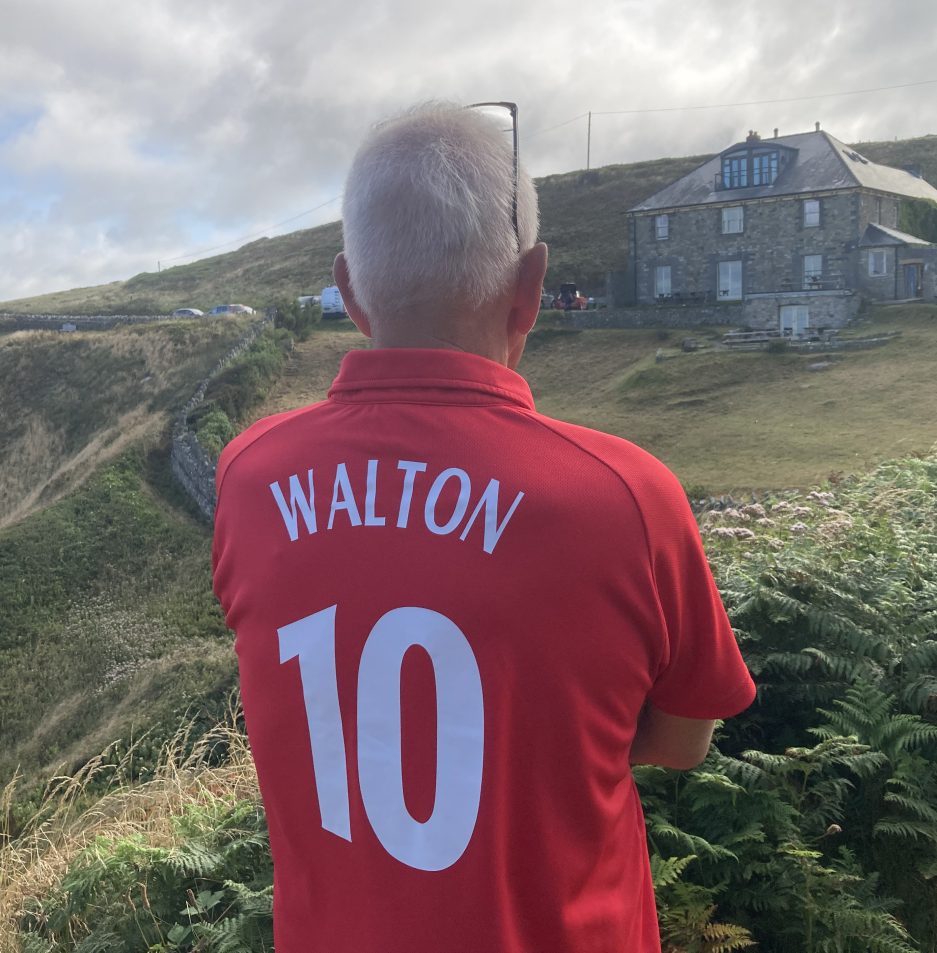
You don’t stop learning. A-and obviously you shouldn’t.
In my case we’re talking the usual zigzags; the pros and cons and trends; the occasi-wipe of the window. I’m a coach (on cricket pathways): I do that for a living but I’m not in the professional game. Like the overwhelming majority of us, I take that privilege seriously and have always tried to get better – whatever that means. Part of that has been about CPD, so the Boy Walton has indeed attended many coach development sessions over the years… but fewer, recently, to be honest.
Pretty certain this is not because I think I know it all: in fact completely certain of that. It’s probably true that there are less in person coach ed opportunities around – perhaps marginally, and perhaps cos I live in the faaar west – and in any case the internet is there and ‘socials’ are there and my curiosity is still there. So I do seek out interesting stuff. Plus I often work with better coaches than myself, on our pathway sessions. I listen to them. They are brilliant, thoughtful people who bring very different ideas and ways to the work.
Some look and sound ‘traditional’, meaning I guess that they are middle-aged white guys (like me) who do base most of their coaching around what many of us have considered The Fundamentals, for decades. We watch and listen to each other… and we do discuss our intentions. We look and we tweak things. This is one of the many reasons I enjoy our work together. My colleagues are good people and really skilled educators: I’m learning (too).
It’s not my plan to fixate on wider coaching theories here, but I better sling in an important note for newbies before I move on. Most of the sessions I/we are involved with are winter then spring sessions for junior regional players; typically aged 10-15. (And yes, we then run the teams through the summer). In this arena, a reasonably high volume of practice around traditionally-identified skills feels both appropriate and surely necessary – particularly (perhaps?) if there’s a kind of sliding scale through which more experienced players get more freedom to choose and/or ‘experiment?’
I accept there is a danger that coaches get this balancing-act wrong, staying too close to ancient truths, offering too little of what more contemporary modes and manuals have been calling ‘player-centred’ activity; possibly or probably enacting a kind of conservatism amidst a festival of radical change. So there are buts… and we must remain open and watchful. Everything depends upon skill and confidence levels, and what individual players need – in their view as well as the coaches – to equip them for the game(s) ahead.
Let’s close this out. My own coaching venn-diagram certainly includes (for example) the maker’s name mantra but is freer, less didactic and more fun (I hope) than just rehearsing straight-batted shots.
A) The game *really has* moved on and b) we coaches surely have to accept that whilst there may be some value in Core Principles, it’s both philosophically right and right in terms of execution to support options. Because c) young players are seeing a different game, with wilder(?) freer, more dynamic responses by batters. Most of their cricket is limited; meaning time-frames around ‘getting in’ or ‘settled’ may be counted in seconds, not overs. Rules no longer rule in the same way, if at all. In short coaches have to let go, and be more generous, in the modern era. We may need more and better questions, and less demonstrations.
But bowling.
I swing – see what I did there? – between muting the tellybox and *really listening*. When the pundits are at it, I mean. Clearly some are ver-ry good – genuine analysts as well as talking heads.
In recent months, as a fraudulent member of the Fast Bowler’s Union, I have really enjoyed some of the talk about bowling; in particular the shift towards describing finer, touchy-feelier movements – like ‘finger pressure’.
Historically Anderson has been both articulate and generous in offering fascinating detail on ‘feel’ and consciousness. Jimmy has been unusually watchable – he’s a dour and sometimes sour fella, let’s be honest – in this respect. But wonderfully aware of both wider body movements – what we might call stature/flow/outlines – and how his hand/wrist/fingers work. This coach rarely falls into anorakdom but I have actually sought out Anderson masterclasses on the interweb… and found them really interesting.
Much of the beauty and thrill of quickish or seam/swing bowling is at the outer limits of that which can be described. Happy Days – it’s ‘magical’ and exciting in a way that resists capture. But Anderson has spoken of a light grip; of that awareness of touch; of ju-ust pushing a little with one finger, to direct or characterise the delivery. Repeatedly, or with subtle, subtle changes, mind: and at mid-eighties miles an hour. Yes the seam is cantered; yes, some bowlers change their approach or ‘block themselves off’ a little, but awareness of finger pressure?!? Racing in, angry, knackered and under a cruel spotlight? Wow. This is truly elite-level consciousness.
It may have been Stuart Broad who used the phrase ‘finger pressure’, this summer. (From memory, Jimmy’s been more of a ‘soft fingers’ man). The FP thing has been adopted onto TV coverage – and it’s a mantra I may use. Partly because it speaks to the fabulousness and the control we can have, the power of minutiae. We feeble humans can do ridicu-stuff like this, when we fix our consciousness so beautifully and completely. Now how to coach that?
I have always loved bowling. The feel of that shiny ball; the challenges around controlling the fekker. Is there swing? How did I get it? Why didn’t that one swing when I’m sure I did the same thing? Do I run in and think of nothing else but soft fingers? (Sometimes I think that works). Or do I cop out and bowl off-cutters? No. Come on, steer it. Some of this has to be about belief.
I take time out to eyeball my players and speak of this crazy magic. Of why it’s my favourite part of the game – just playing around with the ball. They won’t understand everything, because I’ve been lumping in these ver-ry abstract ideas about trying to be conscious and their young minds may not grasp hold of that. But they will and I think do get a sense that I love it, and I want them to enjoy throwing themselves into the adventure. “Bowling is magic. Look at the state of me. 124. And I still absolutely love it.”
So in the nets it’s about finding something. Go have a play. But a play *where you notice things* – because how else can you control?

